
Sustainable Development Goals


Location / Focus:
Melbourne, Australia - integrated tyre recycling
Klean’s Role:
Technology development, licensing and systems integration
Proposed Scale:
Design capacity up to 240 tpd (80,000 tpa); first phase planned at 160 tpd (52,800 tpa)
Status:
In development
Services / Equipment:
Design & Engineering, Feasibility Studies, Supply Chain Management
“This partnership with Klean Industries is an important development for Viva Energy as we continue to explore new pathways to a more sustainable future for our refinery. By transforming end-of-life tyres into valuable resources, we are not only reducing waste but also pioneering new paths for low-carbon fuel production. This project demonstrates our determination to develop a circular economy and deliver environmental and economic benefits for the community.”
- Lachlan Pfeiffer, Chief Strategy Officer, Viva Energy
Australia’s end-of-life tyres represent a supply of carbon, steel and oil that can return to industrial use. Klean Industries is developing the technology and supply chain connections to unlock that value, bringing together tyre pyrolysis, global logistics expertise and a refinery pathway for recovered oil.
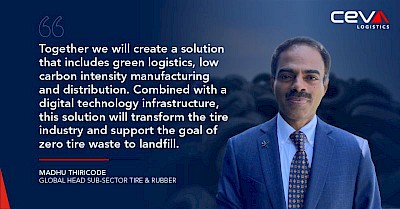 Viva Energy’s choice reflects the industrial ambition behind this initiative: connect Australia’s used tyres with the technology and customers needed to recover their value. Viva has reported a tangible milestone at Geelong Refinery, successfully co-processing tyre pyrolysis oil imported from Poland.
For Klean, that means bringing the needs of collectors, processors and downstream users into the same development strategy. Its collaboration with CEVA Logistics and Goodpack addresses the movement and handling of materials. Its initiative with Viva Energy explores how a proposed Melbourne tyre recycling facility could supply recovered oil to Geelong Refinery.
These relationships show Klean’s contribution at work: connecting technology with the industrial capabilities needed to make a project commercially meaningful. Collection arrangements shape the feedstock supply. Customer requirements shape the recovered products. Engineering must connect the two.
A large waste stream becomes a business opportunity when the whole system can deliver.
Tyres must reach the plant in the right condition, at a sustainable delivered cost and in sufficient volumes. Recovered materials must leave with the quality, consistency and handling arrangements their customers require. Every connection affects the business: collection distances influence costs; feedstock preparation influences processing; product specifications influence upgrading and market access.
These decisions become expensive when they are treated separately. A capacity figure means little without a workable supply plan. An attractive product price needs a credible route to a customer who can accept that product. A project’s commercial case depends on how well those assumptions fit together.
The Australian initiative addresses this challenge through coordinated development across the supply chain. It brings the practical questions of moving tyres and selling recovered materials into the technology discussion early, when they can still influence project design.
Connect the organisations that can turn a resource recovery concept into an industrial proposition.
Klean Industries, CEVA Logistics and Goodpack announced an agreement to develop an integrated end-of-life tyre supply chain. The announced scope included an Oceania reverse-collection proof of concept and evaluation of reusable containers. Each participant brings a distinct capability:
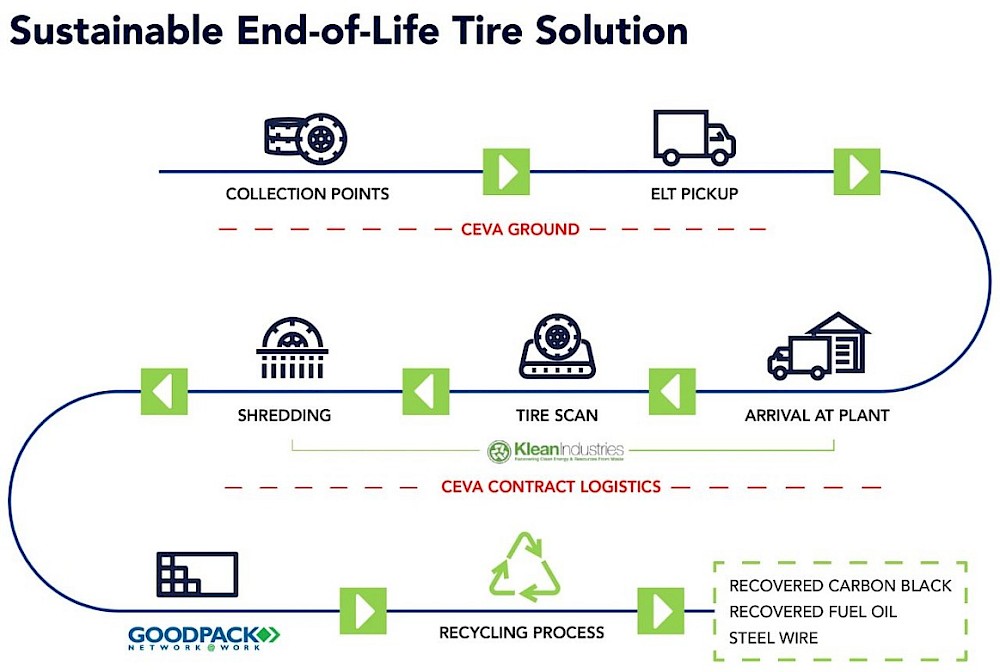
The collaboration also envisaged KleanLoop digital tracking to improve visibility across material movements. Traceability can help connect collection records with processing and product movements, providing a stronger information base for managing an integrated operation.
From collection and transport to preparation, processing and recovered products, each handover needs to work for the next participant. Klean’s role is to bring resource recovery technology into that wider industrial system. For project partners, this means considering the complete journey of the material when developing the plant.
Develop the processing plant and its routes to market together.
The proposed Melbourne facility is being evaluated at a design capacity of up to 240 tonnes of tyres per day, with a first phase planned at 160 tonnes per day. Its intended outputs are recovered carbon black for manufacturing applications, steel for recycling and tyre pyrolysis oil for downstream processing.
Each product has its own commercial requirements. Carbon customers need suitable material characteristics and consistency. Steel needs an effective recovery and recycling route. Oil needs compatibility with the receiving process. Those requirements help determine what the plant must produce and how the wider project should be configured.
A refinery pathway with a tangible milestone.
Viva Energy announced its agreement with Klean to undertake a pre-feasibility study for the Melbourne proposal, with the oil intended for Geelong Refinery. Viva has since reported successfully co-processing tyre pyrolysis oil alongside crude oil, using oil imported from Poland.
That trial provided a practical demonstration of a downstream processing route. For the Australian development, it adds substance to the proposed connection between tyre recovery and an existing refinery. The proposed Melbourne plant remains a separate development project.
The commercial significance is the sequence: engage the potential downstream user, examine the product pathway and use the findings to inform development. This approach gives project teams a stronger basis for decisions about technology, product quality and further investment.
What Klean brings to the project.
Klean’s contribution is rooted in technology development and industrial delivery. Its experience includes developing proprietary processes, designing and engineering equipment, manufacturing, supplying and installing systems, and integrating equipment from other suppliers. That practical background informs how it connects the processing plant with its feedstock supply and product markets.
The Australian case shows how Klean applies its international experience to local conditions. It brings together a global logistics collaboration and a domestic refinery opportunity, with development work focused on how they can support a viable Australian operation. For a project owner, that breadth matters because choices made at one point in the supply chain can change the requirements everywhere else.
Three priority lessons selected from the wider experience behind this project. Each highlights a decision that can materially influence technical performance or commercial viability. Through a defined engagement, Klean applies its broader technology and delivery experience to your project’s requirements, risks and opportunities.
1. Design backwards from the customer’s requirements
The Viva Energy initiative puts a potential industrial user into the development process. Its refinery demonstration adds practical evidence to the oil pathway. Customer specifications should inform process selection, upgrading and handling before equipment decisions are fixed. Klean connects those requirements with the technology needed to meet them.
2. Size the plant around a deliverable feedstock supply
The CEVA and Goodpack collaboration brings collection and handling into the project strategy. Collection density, transport distances and storage arrangements influence delivered feedstock cost and the capacity a location can support. Examining these factors alongside plant design helps establish a credible operating basis before committing to scale.
3. Develop each recovered product as a business stream
Carbon, steel and oil require different quality controls, handling arrangements and customers. The Australian proposal’s refinery pathway illustrates why each stream needs deliberate development. Assessing them together helps identify where upgrading or further qualification is required and how those requirements affect the integrated plant.
Bring the whole project together before committing your capital.
The Australian initiative shows why collection logistics, processing technology and industrial customers must develop together. Decisions about any one of them can change the economics and engineering of the entire facility. Engaging Klean early puts technology and delivery experience to work while your team can still shape those decisions.
For new TyreNova℠ projects, Klean’s exclusive alliance with KBR adds global licensing, engineering and delivery capabilities. Klean brings the technology and technical leadership; KBR brings its capabilities in integrated plant design, proprietary equipment and modular solutions. Together, they provide a route from a defined project towards industrial deployment.
That relationship starts through a transparent, staged development process:
Each stage has an agreed scope, deliverables and commercial terms. Progression depends on the project meeting the requirements for the next stage, keeping development work aligned with the decisions your team needs to make.
Before fixing your equipment selection, plant capacity or product commitments, engage the team that understands how those decisions must work together.
Tell us your location, available feedstock, intended products and development stage. Klean will review the fit and identify the appropriate starting point for a defined engagement.
Develop Your Tyre Recycling Project with Klean » GO.
Learn More:
ABOUT THE INFORMATION PRESENTED
These case studies present selected information authorised for public disclosure. Client identities, operating practices, process details and proprietary know-how may remain confidential. An enquiry, NDA or paid engagement does not automatically grant access to restricted information, client facilities or site visits. Any disclosure or access requires the relevant permissions and a separately agreed scope; some information cannot be disclosed publicly or privately. Klean’s engagements apply its expertise to your project while respecting those boundaries.
